The sustainable management of radioactive waste
Bringing together the UK’s expertise in radioactive waste management – reducing and recycling waste to save costs while protecting people and the environment
Dr Craig Ashton CEnv FISEP, Head of Waste Services, Nuclear Waste Services
The UK has benefited from nuclear technologies for decades. Powering homes, supporting industry and enabling life‑saving medical and research applications. With those benefits comes a responsibility that Parliament rightly scrutinises: radioactive waste must be managed safely and securely, and in a way that represents value for the public purse over the long term.
That is the core purpose of Nuclear Waste Services (NWS). Created to bring together the UK’s leading radioactive waste management capabilities into a single organisation, NWS supports the safe treatment, transport and disposal of radioactive waste and helps ensure the UK has a credible, permanent “end point” for the most hazardous materials.
NWS – providing solutions
NWS specialises in the management, treatment and disposal of radioactive waste produced by nuclear technologies in the UK. We are part of the Nuclear Decommissioning Authority (NDA) group, the public body responsible for cleaning up the UK’s historical nuclear sites.
Our goal is simple: to ensure all categories of the UK’s radioactive waste are managed safely, securely and sustainably.
We provide practical waste solutions – assessing, packaging, transporting and managing radioactive waste using innovative approaches that prioritise sustainable outcomes.
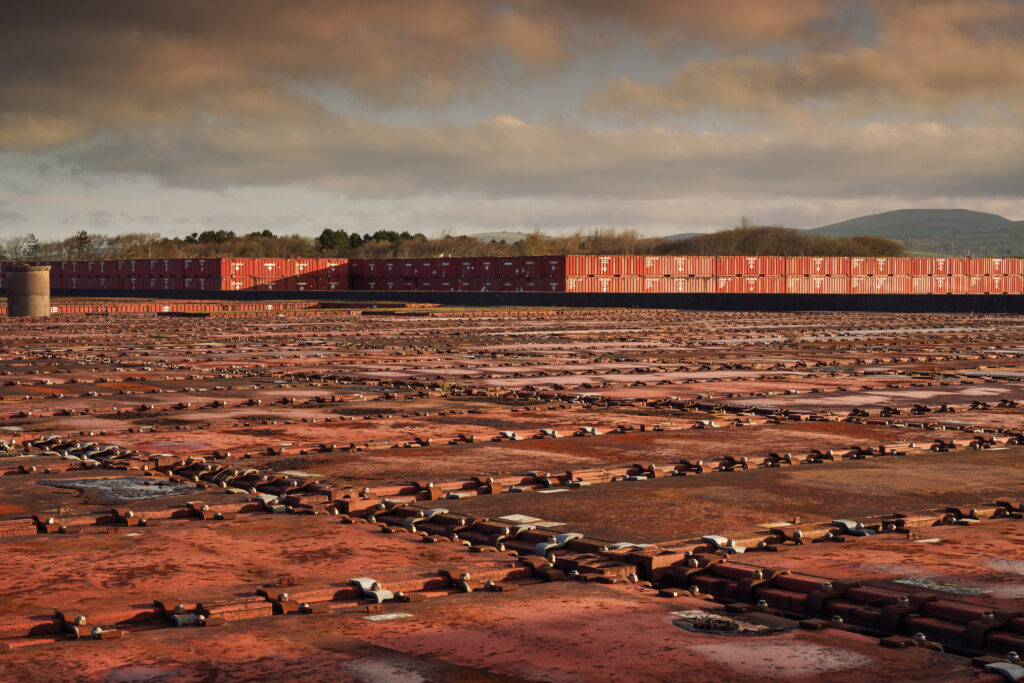
Our solutions include disposal through operating the existing Low Level Waste Repository in Cumbria to planning for a Geological Disposal Facility (GDF) for the most hazardous radioactive waste.
Since the mid-1980s we have worked with organisations across the UK that produce radioactive waste to help ensure that the waste being produced now is suitable for geological disposal.
From design to disposal
With new nuclear recognised by Government as essential to the UK’s low-carbon energy mix and energy security, the ability to manage radioactive waste safely – today and for future generations – has never been more important.
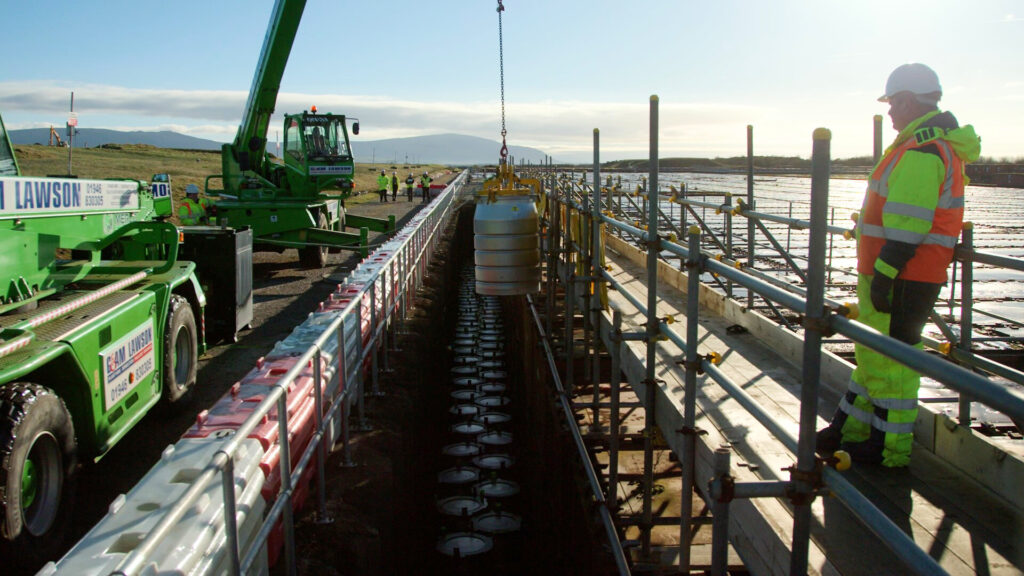
It is vital that new build reactor design consider decommissioning from the very outset. An assessment process has been put in place to scrutinise new nuclear power plant designs and assess their acceptability for use in Great Britain.
NWS – with a remit extending well beyond managing legacy waste – is playing a pivotal role ensuring that during plant design, construction and beyond, developers have clear and credible plans for the safe and permanent disposal of the waste their facilities will produce. In addition to receiving the most hazardous legacy waste, the GDF will accept waste arising from new plants, so at NWS we must ensure it is compatible with final disposal in the facility.
Diverting waste from disposal
Our role spans the full waste lifecycle. We assess waste, advise on the most sustainable management route, and apply innovative treatments to reduce its volume or radioactivity wherever possible. Our partnership with the Chartered Institute of Waste Management increases trust and credibility of the solutions we provide.
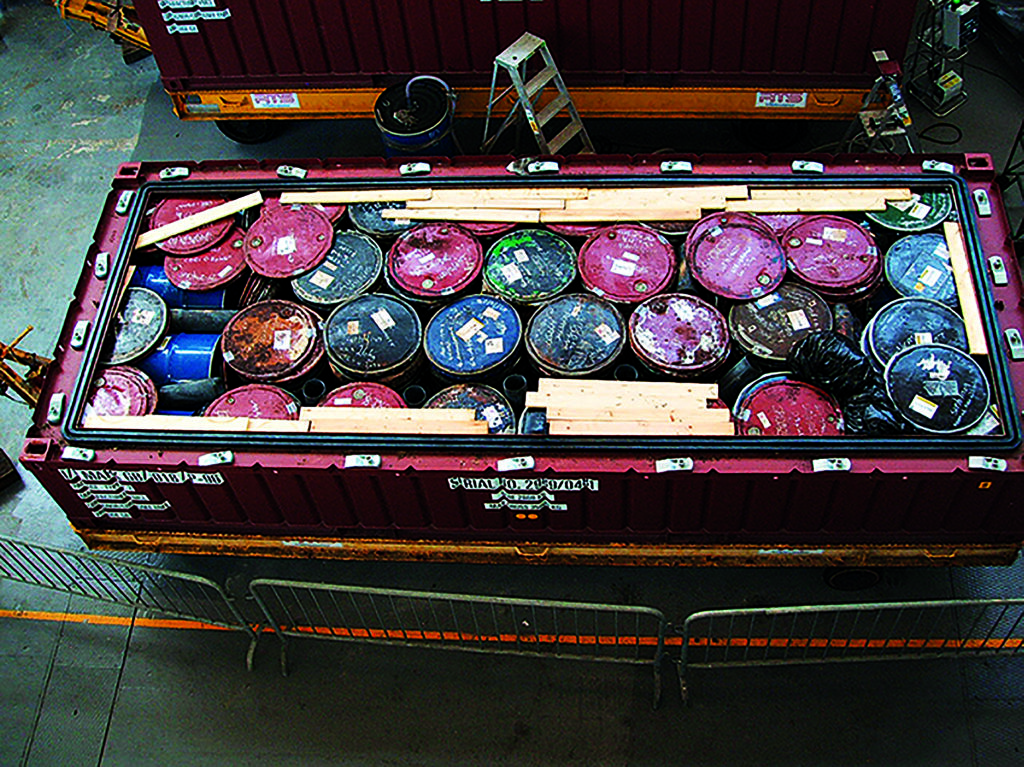
Around 15 years ago, the default approach for low level waste was disposal at the Repository on the West Cumbrian coast. Waste was placed in expensive steel containers and permanently disposed of.
If that approach had continued, the UK would have needed a new low level waste repository at significant cost.
Instead, the NDA introduced a new strategy based on the waste hierarchy: avoid, reduce, reuse, recycle and only dispose as a last resort, delivered by a new centralised waste services capability. This work has been making significant savings to the taxpayer, made great efficiencies in our waste disposal management, avoided the unnecessary use of higher‑cost disposal facilities and helped speed up decommissioning.
A step change in how waste is managed across the nuclear sector now exists. Over the past decade, we have increasingly adopted alternative treatment routes such as incineration, permitted landfill for lower-activity waste, super-compaction, and metal decontamination for recycling.
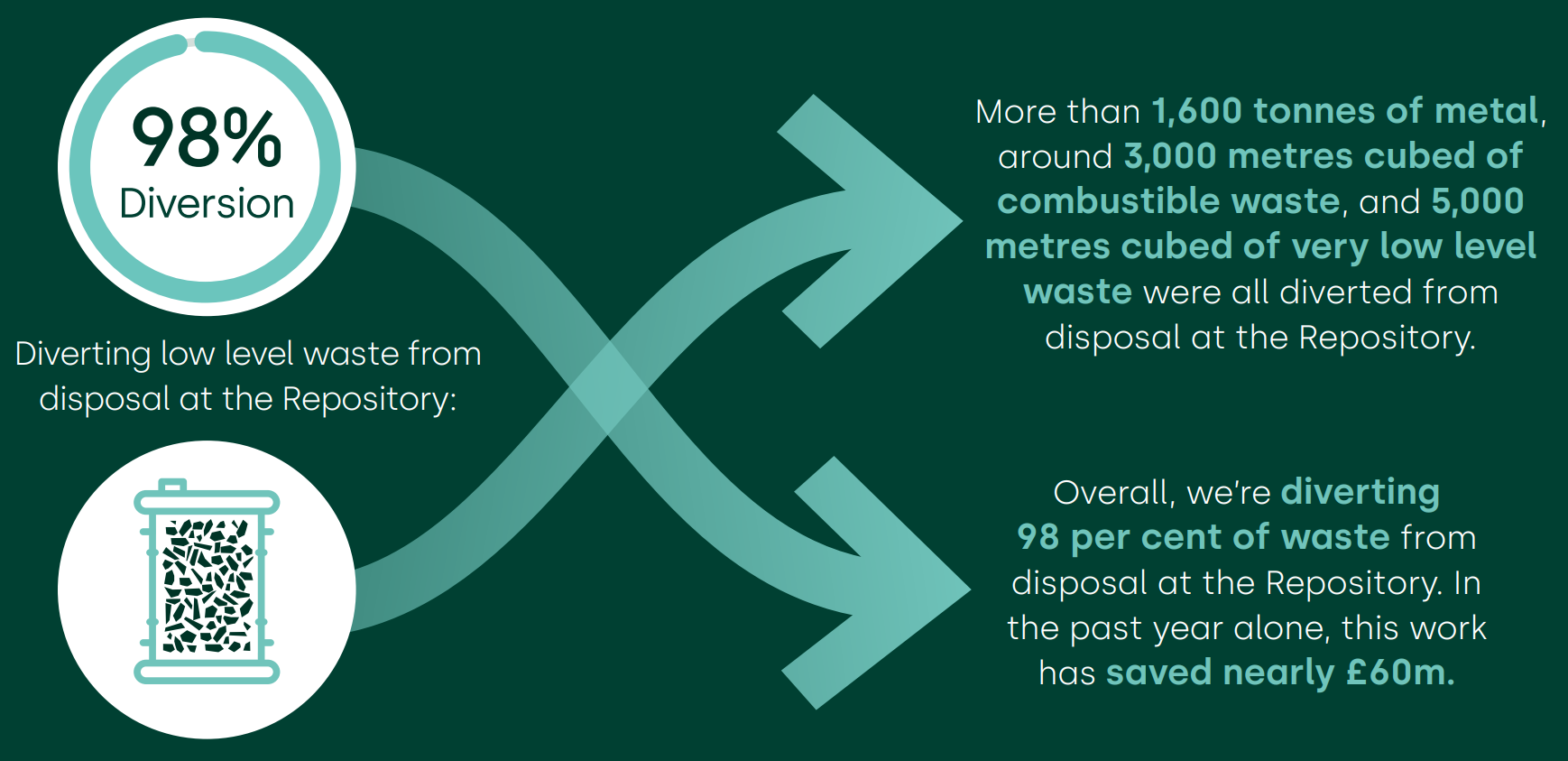
These approaches deliver both environmental and economic benefits. Diversion is typically more cost-effective than disposal, and techniques such as surface treatment allow contaminated metals to be cleaned and safely reused. In practice, that means expanding the range of treatment routes used across the UK, so that suitable waste can be diverted away from disposal. By re-using or recycling where possible, we now divert 98% of waste away from disposal at the Repository site. In the past year alone, this approach has saved nearly £60 million and more than £900 million in the past decade; money that can be redirected to hazard reduction and decommissioning priorities. Waste management is a lever that can accelerate clean-up and reduce long-term liabilities. When we avoid unnecessary disposal, we protect constrained national capacity, improve efficiency across the system and help ensure public money is spent once and spent well.
Going further
Building on our success in diverting lower activity waste from disposal, we are now exploring whether similar principles can be applied to some wastes currently in storage and destined for deep geological disposal in a GDF.
Through research and trials, we are examining whether innovative treatment methods could reduce the volume of certain lower activity wastes that would otherwise require disposal underground. These trials will inform decisions on the most sustainable techniques to apply in the future.
This work does not remove the need for a GDF. A GDF remains the safe, secure and long-term solution for the UK’s most hazardous radioactive waste. However, by reducing volumes where it is safe and appropriate to do so, we can maximise value and support delivery of the NDA mission.
Our work accelerates decommissioning while ensuring waste is managed in the most sustainable and cost-effective way possible.
Through collaboration with customers and the supply chain, and with a clear focus on innovation and delivery, we are making nuclear waste permanently safe, sooner.