Completing the nuclear fuel cycle
by Professor Neil Hyatt, Chief Scientific Adviser, Nuclear Waste Services
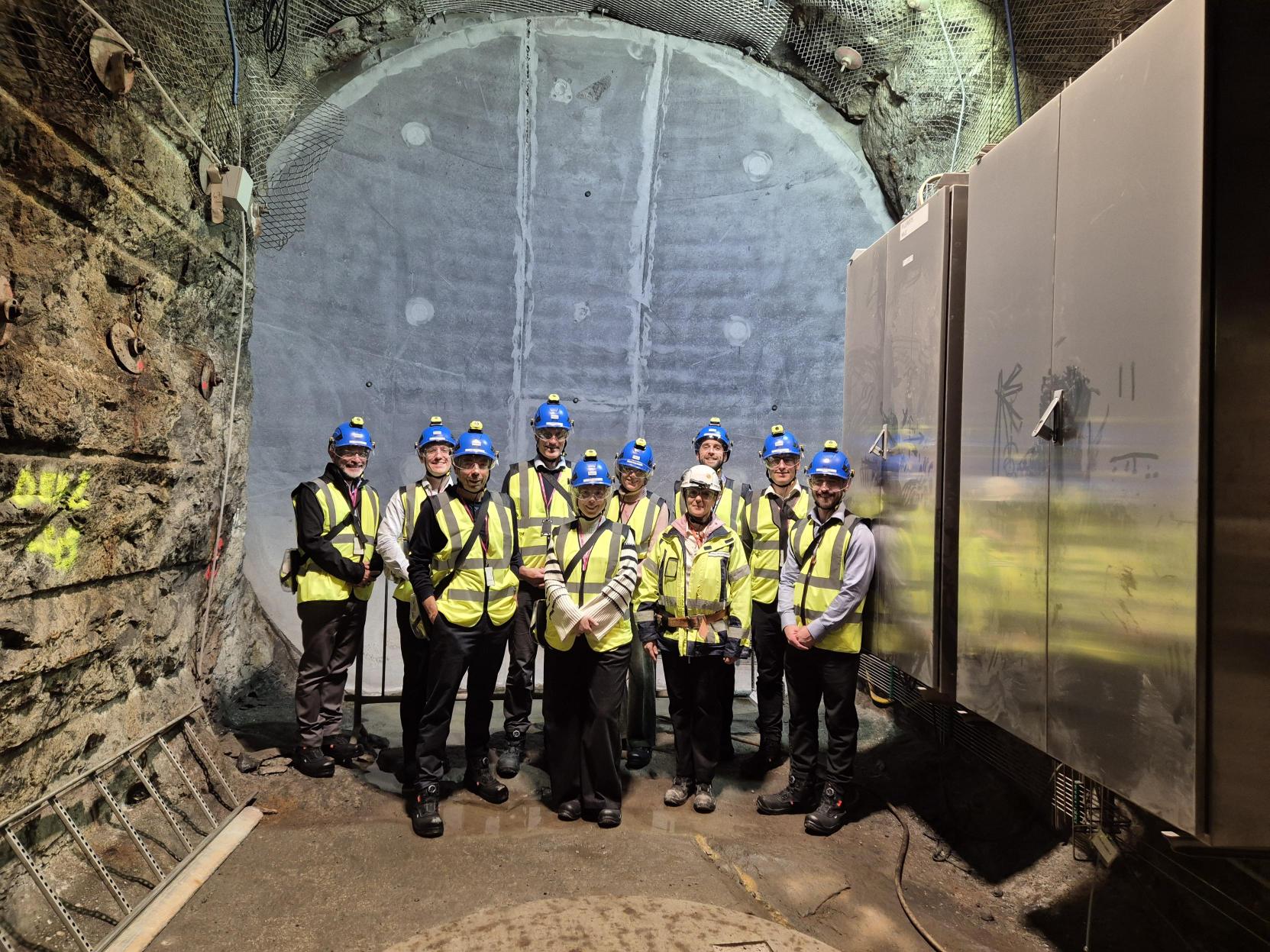
Descending 450m down a winding 5km long tunnel carved out of the Finnish bedrock really brings home the scale of the engineering challenge in constructing the world’s first geological disposal facility (GDF) for spent nuclear fuel. When it opens in the near future, the repository in Western Finland will be the first in the world to provide a permanent disposal solution for the most hazardous radioactive waste, an issue facing all countries using nuclear power, including the UK.
The Onkalo repository for spent nuclear fuel will keep these hazardous materials secure and away from the surface environment, including people, for hundreds of millennia.
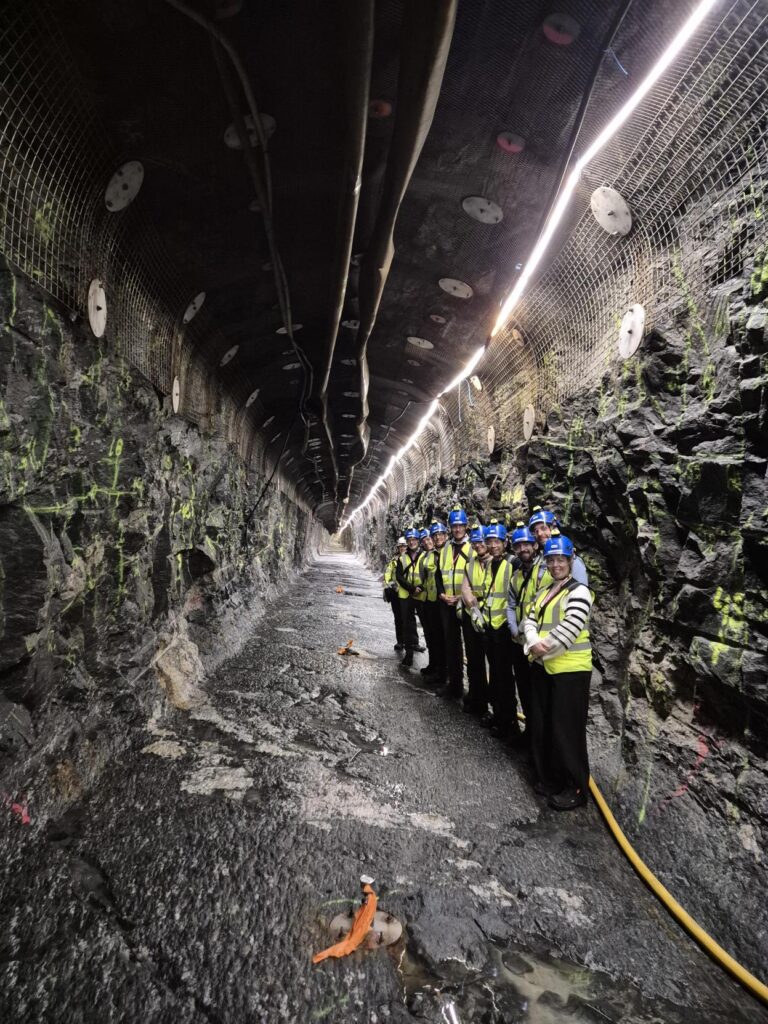
Being part of a visiting group including members of the Nuclear Energy APPG, we were among the last visitors to be able to walk around the tunnels and galleries before they become the final resting place of these materials.
As the UK embarks upon the construction of a new generation of nuclear reactors in order to help realise the Government’s ambition for a low-carbon, sustainable and secure supply of energy for this country, the issue of decommissioning and disposal of the resulting most-hazardous radioactive waste is one that must be addressed.
The Onkalo repository shows how it can be done.
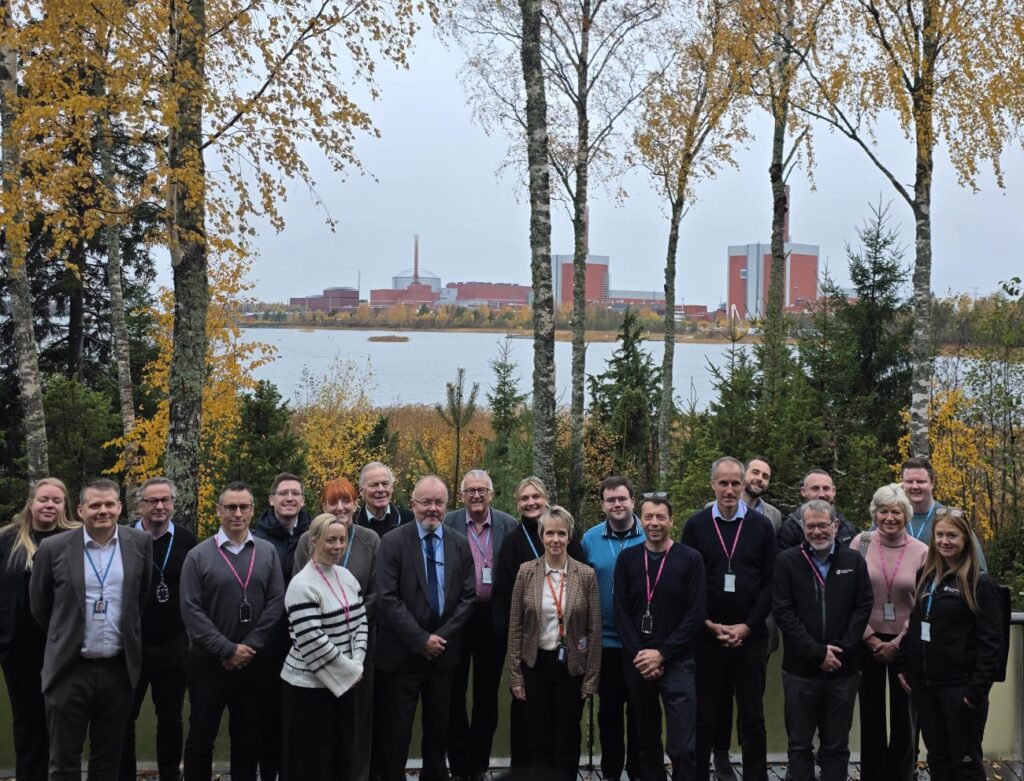
The group also visited the nearby Olkiluoto 3 EPR (European Pressurised-water Reactor), the largest in Europe and the same technology being used in Hinkley Point C and Sizewell C. This helped to focus minds on the need for Government and developers to take account of the whole nuclear fuel cycle from generation, through decommissioning, to final disposal.
“Seeing first hand how other nuclear economies like Finland can use innovative technologies to address the challenge of radioactive waste offers a vision of the future for our own programme for the safe and secure disposal of radioactive waste in the UK.”
– Charlotte Nichols MP, Chair of the Nuclear Energy APPG
It should not be forgotten that while nuclear power can produce large amounts of the energy needed to power our economy, the sector itself is a major source of jobs, expertise and growth. Investment in Sizewell C will, says the Government, go towards the creation of up to10,000 jobs, including 1,500 apprenticeships, and support thousands more jobs in the supply chain across the UK.
Yet this is not just about new generating facilities. Decommissioning and disposal also need a substantial workforce – and over a longer timeframe. The Nuclear Decommissioning Authority (NDA) Group currently employs over 19,000 people across its 17 sites and contributes more than £3 billion to the economy annually. In addition to the legacy sites, the work will continue into the future as every time a nuclear power station comes to the end of its working life, it will have to be decommissioned, with long-lasting hazardous waste stored ready for safe and secure disposal in our own GDF which is currently being developed.
GDFs are internationally recognised by governments, technical experts, and scientists as the best solution for the safe, permanent disposal of our most hazardous radioactive waste. 4,000 jobs could be created during the c 25 year siting and construction phases of a GDF – and work will continue for about 175 years, generating an average of 2,000 jobs per year. The delivery of a UK GDF has been entrusted to Nuclear Waste Services (NWS), one of several Operating Companies belonging to the NDA.
The Finnish programme has taken around four decades to reach its current state, from the point of enabling policy, and the UK programme is proceeding to the same timeframe. However, there are significant differences between the two. Finland’s nuclear fleet is much smaller and less diverse than the UK’s. Consequently, our waste is significantly different, both in terms of volume and complexity. The UK GDF is projected to dispose of 10 times as much spent fuel as the Finnish facility, plus high-level waste glass, plutonium, uranium, and intermediate level wastes.
The Olkiluoto 3 power station and Onkalo repository are located within the municipality of Eurajoki, a rural community of less than 10,000 inhabitants. The community is fully engaged in, and committed to, the project. Community consent was built in from the earliest stages.
In the UK too, community consent is an essential element of the underpinning government policy. As the developer, NWS needs both a suitable site and a willing community before we can construct a facility. The host community will be able to unlock significant financial benefit from the programme and to plan for a stable economic future lasting a number of generations.
Delivering a GDF for the UK is an important task. As the final stage in the nuclear cycle, disposal removes from future generations a long-term burden of care for the waste that has been created. At NWS, we are making good progress towards achieving that goal and building on the experience and insight of others, including the operators of the Finnish repository at Onkalo.
Professor Neil Hyatt is Chief Scientific Adviser to Nuclear Waste Services.
Neil is accountable for assurance of the scientific and technical evidence base for decision making. He is also Aegis Professor of Deep Time at the University of Bristol and adjunct Professor in Nuclear Materials at Washington State University.
He held the Royal Academy of Engineering / Nuclear Decommissioning Authority Chair in Radioactive Waste Management at the University of Sheffield (2002-22) and was Head of the Department of Materials Science (2015-18).